- Home
- Essential Oil Profiles
- Lavender Essential Oil
As an affiliate for Bookshop, Amazon, and other programs, I may earn a small commission for products purchased through links. Privacy policy and disclosures.
Benefits of Lavender Essential Oil and Uses in Aromatherapy
The many uses and benefits of lavender essential oil (Lavandula angustifolia), along with its gentle nature, make it one of the most used essential oils in aromatherapy. Lavender can enhance the effectiveness of most other essential oils in a blend and has an affinity for all body systems, especially the skin, according to The Aromatherapy Companion (Shutes, 2022).
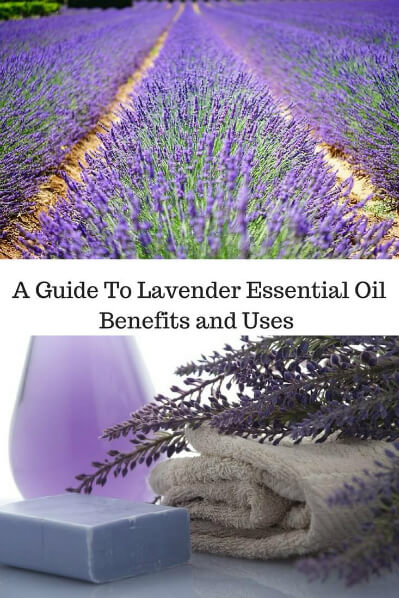
The world of lavender is vast and includes oils other than Lavandula angustifolia, the most commonly used lavender essential oil (formerly identified as Lavandula officinalis; also sometimes called Lavandula vera, English lavender, fine lavender, or true lavender).
While many people consider Lavandula angustifolia to be the best lavender for essential oil, other useful species for aromatherapy include Lavandula latifolia (spike lavender), Lavandula x intermedia (lavandin), and Lavandula stoechas (Spanish lavender).
Basic Lavandula Angustifolia Essential Oil Facts
More than 40 varieties of the Lavandula angustifolia plant exist, although not all are used to produce essential oils. However, all Lavandula angustifolia oils are therapeutically interchangeable, according to Aromahead.
Plant family: Lamiaceae (the mint family).
Production: Steam distilled from the flowering tops of the plant. Producing one fluid ounce (30 ml) of essential oil requires more than five pounds of fresh lavender.
Major chemical components: The exact composition of a lavender oil depends on its variety and growing location. However, the two main constituents of all Lavandula angustifolia oils are linalool and linalyl acetate.
Aroma: Generally light and mild with a sweet, floral aroma and possible woody undertones. However, the aroma can vary greatly depending on the variety of Lavandula angustifolia and its growing location, climate, weather, time of harvest, and distillation method. A particular lavender’s scent may be herbaceous, or woody, or bright and sweet, or soft and honey-like.
Perfume/Aromatic note: Generally considered a middle note oil but you can use it as either a base or top note, depending on the essential oil blend.
Is it safe to use lavender essential oil during pregnancy? Yes, according to Aromatherapy and Massage for Mother and Baby and other sources. Always consult your healthcare provider if you have any pregnancy complications or other concerns.
Is essential oil of lavender safe for children? Yes, it is generally safe for children and has traditionally been used to calm small children and babies. Years ago, a study linked lavender to possible breast enlargement in boys. Many sources, including aromatherapy expert Robert Tisserand in Lavender Oil Is Not Estrogenic, have discussed why that study was inaccurate.
Caution: Some oils sold as "pure lavender" are either a different type of lavender or have been adulterated with another type of lavender or synthetic ester linalyl acetate. Buy from a trusted source.
"Lavender is among the safest and most widely used oils in aromatherapy and is considered a universal first aid oil," according to Aromatherapy: A Complete Guide to the Healing Art.
Overview of Benefits of Lavender Essential Oil
Lavender is often touted for its relaxing and calming effects. But the oil can actually relax or stimulate, depending on how you use it and what your body needs.
“Lavender is an adaptogen, meaning it has one effect at low dosage and another in high dosage. Depending on the person on whom it is being used, one drop of lavender oil would be quite sufficient to make anyone sleep, while three could have the opposite, stimulant effect.” (The Fragrant Mind, p. 55)
Lavender "teaches us about balance and how to live in the present moment, on all levels—physical, emotional, mental, and spiritual. It shows us the balance point in each moment and promotes remarkable healing. Lavender can help rejuvenate us when we are depleted, and calm and relax us when we are anxious.” (Aromatherapy Anointing Oils, p. 94)
The benefits and uses of lavender are so extensive, I've written the following separate articles:
- Lavender Essential Oil Skin Care
- Lavender Essential Oil Health Benefits
- What is Lavender Essential Oil Good for Around the Home?
- Lavender Essential Oil Spiritual Benefits and Energetic, Subtle, and Magical Uses
This article contains the following topics:
- Lavender Essential Oil Diffuser Benefits and Blends
- Lavender Essential Oil in Chinese Medicine
- Lavender in Ayurveda
- Lavender FAQ
Lavender Essential Oil Diffuser Benefits
The benefits of lavender essential oil in a diffuser include reducing stress and anxiety, relieving headaches and migraines, improving sleep, repelling insects, and freshening air.
You can diffuse lavender alone, but a blend is often more effective. For the following lavender essential oil blends for diffuser use, combine the oils and use the blend according to your aromatherapy diffuser's instructions.
Relaxing Blend
- 2 drops lavender
- 2 drops frankincense essential oil
- 1 drop ylang ylang essential oil
Uplifting Blend
- 1 drop lavender
- 1 drop ylang ylang essential oil
- 3 drops grapefruit essential oil
Calming Blend
- 3 drops lavender
- 2 drops sweet orange essential oil
Insect Repelling Blend
- 2 drops lavender
- 2 drops lemongrass essential oil
- 1 drop eucalyptus essential oil
Breathe Easy
- 2 drops lavender
- 2 drops lemongrass essential oil
- 1 drop peppermint essential oil
Source: 100 Amazing Blends and Uses of Essential Oils
Purify Indoor Air
- 4 drops lavender
- 2 drops bergamot essential oil
- 2 drops lemon essential oil
Source: Llewellyn's Complete Formulary of Magical Oils
Lavender Essential Oil in Chinese Medicine
In Traditional Chinese Medicine lavender has cool, dispersing, and relaxing qualities that help relieve heat, inflammation, spasm, and pain, according to Aromatherapy for Healing the Spirit. Lavender works to cool an overheated liver, soothes and supports the Qi of the heart, and releases pent-up energy within the Wood element.
Aromatica: A Clinical Guide to Essential Oil Therapeutics, Volume I, offers the following TCM characteristics:
- Movement: Circulating
- Warmth: Neutral to cool
- Meridian tropism: Heart, Pericardium, Liver, Lung
- Five element affinity: Fire, Wood
- Essential function: To nourish Yin, activate Qi, clear heat, and calm the Shen (Deficient yin can lead to fatigue, insomnia, hot spells, night sweats, and headaches. Agitated Shen can lead to mental restlessness, anxiety, worry, depression, and palpitations.)
See pages 233–234 for more details.
Benefits of Lavender Essential Oil in Ayurveda
In ayurveda, lavender balances all three doshas, according to Marma Points of Ayurveda. The oil's virya (energy) is cooling. The rasa (taste) is sweet and astringent and the vipaka (aftertaste) is sweet. This oil tranquilizes and sedates, calms the mind, and induces a deep sense of relaxation. The oil has an affinity for the lungs and may dilate bronchi and also help relieve depression, anxiety, and insomnia.
Ayurveda and Aromatherapy states lavender affects all tissue and has the following indications: burns, wounds, insect bites, eczema, dermatitis, boils, blisters, dry skin, acne, hair loss, dandruff, fluid retention, rheumatism, arthritis, headache, yeast infection, athlete’s foot, colds, flu, fever, motion sickness, nervous heart, stress, insomnia, irritability, mood swings.
Benefits of Lavender Essential Oil FAQ
Are there lavender essential oil side effects?
Are there lavender essential oil side effects?
Side effects are uncommon but possible, especially if you use the oil in excess (that is, not properly diluted or for long periods of time) or you use an old, adulterated, or poor-quality oil. Potential side effects include headaches and adverse skin reactions.
Can I use lavender essential oil for dogs and cats?
Can I use lavender essential oil for dogs and cats?
Generally, yes, you can use a properly diluted authentic lavender essential oil—sparingly, especially with cats. Check with your vet if the animal is young, old, frail, or pregnant or has a medical condition. See: Essential Oils for Dogs and Essential Oils for Cats.
Is lavender essential oil antibacterial?
Is lavender essential oil antibacterial?
Yes, based on traditional aromatherapy use and according to these (and other) studies:
- https://www.sciencedirect.com/science/article/abs/pii/S0962456206000087
- https://pmc.ncbi.nlm.nih.gov/articles/PMC10733459/
- https://www.nature.com/articles/s41598-017-08673-9
How do you extract essential oil from lavender flowers?
How do you extract essential oil from lavender flowers?
The most common way to make lavender essential oil is steam distillation—distill the lavender buds, capture the steam, condense the steam into a liquid, and separate the essential oil from the water. This process requires heat, pressure, equipment, skill, and patience.
The Complete Aromatherapy & Essential Oils Handbook for Everyday Wellness explains that long distillation times can extract more of the desirable chemical components. Most commercial lavender oils are moderately priced because they were distilled for only 40 minutes. Lavender that's distilled for longer than an hour (78 minutes produces maximum results) has more beneficial components than most commercially produced lavender essential oils.
Less common are lavender absolute or CO2 extract. They are not technically essential oils, but you can use them in aromatherapy. They may have different properties and precautions than the essential oil.
About the Author
Carol Wiley is a retired massage therapist and freelance writer. She uses her deep interest in aromatherapy and essential oils to research their benefits and uses and bring you summaries and blends with links to more resources.
If you find this site useful, you can show your support by buying through my affiliate links. The site is a labor of love, and I appreciate any income that helps keep it up and running.
Buy essential oils at Aromatics International or Rocky Mountain Oils.
Buy massage supplies at Massage Naturals.
Buy anything at Amazon.
You might like these
Ylang Ylang Essential Oil Benefits and Uses In Aromatherapy
Understand the benefits and uses of ylang ylang essential oil, including acting as an aphrodisiac, balancing all skin and hair types, and relaxing muscles.
Lemon Essential Oil Benefits and Uses In Aromatherapy
The bright, uplifting, clean aroma of lemon essential oil makes it great for energizing, cleaning, clearing the air and the body, and more.
Sage Essential Oil Benefits and Uses In Aromatherapy
Sage essential oil has uses and benefits in aromatherapy but must be used with caution due to its components. Learn more about how to use sage safely.