- Home
- Essential Oil Profiles
- Cistus Essential Oil
As an affiliate for Bookshop, Amazon, and other programs, I may earn a small commission for products purchased through links. Privacy policy and disclosures.
Cistus Essential Oil Benefits and Uses in Aromatherapy
When you feel fearful and disconnected from your spiritual self, cistus essential oil (Cistus ladaniferus) can help you reconnect to the spiritual realm and bring your whole being back into balance, according to aromatherapist Valerie Ann Worwood in Aromatherapy for the Soul.
Basic Cistus Facts
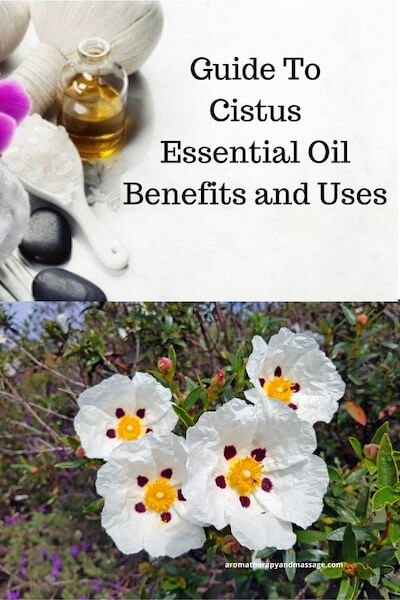
Cistus is also called rock rose (also spelled rockrose) or labdanum.
Plant family: Cistaceae.
Production: Steam distilled from the flowers and leaves of the plant. Two other oils are also made from the same plant: Labdanum absolute is solvent-extracted from the resin. Cistus absolute is solvent-extracted from the flower tops and leaves. As always, know what you are buying.
Aroma: Warm, woody, herbaceous.
Perfume/Aromatic note: Base. The oil is a common fixative in perfumes.
System affinity: Skin, according to The Ultimate Guide to Aromatherapy.
Is cistus safe to use during pregnancy? Possibly not. Consult a professional.
Is cistus safe for children? OK for children ages 2+, according to Revive Oils.
Caution: If cistus essential oil becomes oxidized, it can cause skin sensitization.
Main components of cistus essential oil:
- alpha-pinene 3.5–56.0%
- camphene 1.1–10.3%
- (3Z)-hexen-1-ol 0–6.8%
- 2,2,6-trimethylcyclohexanone 1.7–5.7%
- bornyl acetate 2.1–4.8%
Main components of labdanum absolute:
- alpha-pinene 4.9–44.0%
- 3-phenylpropionic acid 0–22.2%
- camphene 1.4–7.0%
Source: Essential Oil Safety, 2nd Edition
Cistus Essential Oil Benefits
Cistus promotes willpower, perseverance, self-confidence, and motivation, according to Aromatica: A Clinical Guide to Essential Oil Therapeutics, Vol. 2. Physically, the essential oil restores hypotonic/weak conditions and decongests congestive/damp conditions. The essential function of the oil in Traditional Chinese Medicine is to draw together fluids, resolve damp, and stop bleeding. This oil is drying and generally not recommended for conditions with dry cough, dry mouth, or constipation.
Sources commonly attribute the following uses and benefits to cistus essential oil:
- Calms the nervous system and may help relieve nervousness, tension, stress, chronic fatigue, fibromyalgia, anxiety, and insomnia.
- Eases menstrual problems.
- Soothes hemorrhoids.
- Relieves symptoms of colds, coughs, flu, and bronchial conditions.
- Alleviates arthritis, other joint aches and pains, and muscle pain and swelling.
In skin care, cistus essential oil may be beneficial for the following conditions:
- Acne, dermatitis, boils, or inflamed skin
- Chronic skin disorders such as eczema and psoriasis
- Mature skin and wrinkles
- Minor cuts and wounds
- Oily skin
- Scars
- Sun-damaged skin
Sources:
- Aromatherapy: A Complete Guide to the Healing Art
- Complete Book of Essential Oils and Aromatherapy
- Complete Aromatherapy & Essential Oils Handbook for Everyday Wellness
- Complete Aromatherapy Handbook: Essential Oils for Radiant Health
- Encyclopedia of Essential Oils (updated edition)
Energetic and Spiritual Benefits of Cistus
The Complete Guide to Aromatherapy, Third Edition, Vol. 1, states that in Five Element theory, the scent of the oil has a strong affinity with the Earth element and instills a deep sense of calm and tranquility. Use the oil as a meditation aid and for psychic work. The scent settles and quiets the physical, mental, emotional, and spiritual bodies.
Suggested essential oils to blend with cistus:
- For comfort during emotional or spiritual crisis: helichrysum, frankincense, lavender, or myrrh.
- To enhance a meditation practice: atlas cedarwood, frankincense, pine, or sandalwood.
Cistus has the following chakra uses, according to Aromatherapy and Subtle Energy Techniques:
- Fifth (throat) chakra: promotes the ability to hear spiritual messages.
- Sixth (third eye) chakra: promotes intuitive visions and dreams.
- Seventh (crown) chakra: assists in receiving clear spiritual guidance.
Cistus can help reduce feelings of disconnection and help you connect with your spiritual side to overcome fear, notably when used during meditation. The oil warms the heart and is especially helpful after experiencing trauma or a dramatic loss and its associated fear. (Source: Amy Emnett. "Conquering the Fear Within." Summer 2017.2 NAHA Aromatherapy Journal, p. 19.)
Use cistus to consecrate space, stimulate intuition, and help receive messages from spirit guides, according to Mixing Essential Oils for Magic. The oil broadens self-awareness.
Cistus Essential Oil Uses and Blends
For mature and damaged skin, blend cistus with helichrysum, frankincense, lavender, patchouli, or rose absolute in rosehip carrier oil, according to The Complete Guide to Aromatherapy, Third Edition, Vol. 1.
Aromatica suggests the following essential oils to blend with cistus:
- To calm chronic insomnia, anxiety, unknown fears, or chronic stress-related conditions: atlas cedarwood
- To calm excessive or prolonged menstrual bleeding: geranium
- To support the immune system: vetiver
- To help relieve chronic anxiety and insomnia: lavender
Chronic Pain Relief Massage Oil
- 2 tablespoons tamanu oil (Calophyllum inophyllum)
- 6 drops cistus essential oil
- 3 drops German chamomile essential oil
- 2 drops helichrysum essential oil
- 4 drops frankincense essential oil
- 3 drops myrrh essential oil
Blend ingredients in a one-ounce (30 ml) glass bottle. Cap and shake gently. Use as needed to massage painful areas and old injuries. Great for scars!
Source: Aromahead
Dry, Damaged Skin Balm
- 2 teaspoons rosehip oil
- 5 drops cistus
- 2 drops carrot seed essential oil
- 3 drops frankincense essential oil
- 4 drops helichrysum essential oil
- 6 drops lavender essential oil
- Tamanu oil
Add rosehip oil and essential oils to a 2-ounce squeeze bottle. Fill the bottle with tamanu oil. Close and shake gently. Apply a few drops to dry or damaged skin two or three times a day to soothe the skin. (1.7% dilution)
Source: Eden's Garden
Anxiety Relief Blend
- 8 drops cistus
- 8 drops lavender essential oil
- 8 drops sandalwood essential oil
- 6 drops rose essential oil
Use a few drops in a diffuser or dilute in a carrier oil for a massage.
Adapted from Materia Aromatica
About the Author

Carol Wiley is a retired massage therapist and freelance writer. She uses her deep interest in aromatherapy and essential oils to research their benefits and uses and bring you summaries and blends with links to more resources.
If you find this site useful, you can show your support by buying through my affiliate links. The site is a labor of love, and I appreciate any income that helps keep it up and running.
Buy essential oils at Aromatics International or Rocky Mountain Oils.
Buy massage supplies at Massage Naturals.
Buy anything at Amazon.
You might like these
Ylang Ylang Essential Oil Benefits and Uses In Aromatherapy
Understand the benefits and uses of ylang ylang essential oil, including acting as an aphrodisiac, balancing all skin and hair types, and relaxing muscles.
Lemon Essential Oil Benefits and Uses In Aromatherapy
The bright, uplifting, clean aroma of lemon essential oil makes it great for energizing, cleaning, clearing the air and the body, and more.
Sage Essential Oil Benefits and Uses In Aromatherapy
Sage essential oil has uses and benefits in aromatherapy but must be used with caution due to its components. Learn more about how to use sage safely.