- Home
- Essential Oil Profiles
- Eucalyptus Essential Oils
As an affiliate for Bookshop, Amazon, and other programs, I may earn a small commission for products purchased through links. Privacy policy and disclosures.
Types of Eucalyptus Essential Oil and Their Uses in Aromatherapy
The genus Eucalyptus includes more than 660 species of trees and shrubs. Only about 20 of them are used to produce essential oils. The most common types of eucalyptus essential oil used in aromatherapy are Eucalyptus globulus and Eucalyptus radiata. They are discussed in my article Benefits of Eucalyptus Essential Oil.
I also have separate articles on these oils:
- Eucalyptus dives (peppermint eucalyptus) contains very little 1,8-cineole and may be less irritating to skin than other eucalyptus varieties.
- Eucalyptus citriodora (lemon eucalyptus) has a high percentage of citronellal that gives the oil a fresh, lemony, relaxing scent, making the oil less stimulating than most other eucalyptus essential oils for nighttime use.
- Eucalyptus staigeriana (lemon ironbark) is a low 1,8-cineole oil that is versatile, gentle, and very safe for respiratory use.
The following less common essential oils are covered in this article:
- Eucalyptus smithii
- Eucalyptus polybractea
- Eucalyptus camaldulensis
- Eucalyptus macarthurii
- Eucalyptus bicostata
What do all types of eucalyptus essential oils have in common? They all, to some degree, help relieve respiratory congestion and infection, offer immune support, and soothe muscle pain.
Eucalyptus Smithii Essential Oil
Eucalyptus smithii, also known as gully gum, Smith's gum, or white iron bark, has an aroma similar to E. globulus but with a musty, earthy base note, according to Aromatica, Vol. 1. This oil contains around 77% 1,8-cineole, according to Essential Oil Safety, 2nd Ed.
In general, the uses and benefits of E. smithii are similar to those of E. globulus. However, E. smithii is milder and safer for children than most other Eucalyptus species.
Why is E. smithii considered safe for children even though it contains about as much 1,8-cineole as E. globulus? The other constituents modify the effects of the whole oil. "Although it contains a high percentage of 1,8-cineole, the synergy between components makes it a gentler, equally effective oil as Eucalyptus globulus," according to Aromatherapy for Health Professionals, 3rd Edition, p. 240.
Pregnancy safe? Yes, according to IFPA Pregnancy Guidelines. Consult a professional for specifics.
Perhaps the best known use for E. smithii is for respiratory care to help relieve congestion and expel mucus. The oil also:
- Energizes and modulates the immune system
- Relieves muscle and joint pain and tension
- Relieves headaches, especially ones related to congestion
Emotionally, E. smithii both calms and stimulates and can clear mental fog and support focus and emotional steadiness. When you feel stress, especially with shallow breathing or chest tightness, this oil encourages deeper inhalation and a sense of spaciousness.
Warming Muscle Massage Blend
Use this massage oil for tired muscles and to encourage circulation.
- 4 drops Eucalyptus smithii essential oil
- 3 drops lavender essential oil
- 2 drops sweet marjoram essential oil
- 2 tablespoons carrier oil
Sources: Aromatherapy: A Complete Guide to the Healing Art and Penny Price
ACHS Green Spring Cleaning suggests these uses of E. smithii essential oil:
- Use undiluted to dissolve sticky tape remnants on furniture, floors, and appliances. Be cautious with wooden furniture because the oil can remove varnish and finish.
- Diffuse to disinfect rooms or make a spray and use to sterilize toilet and bathing areas.
- Make a floor cleaner by adding 3 teaspoons to a bucket of boiling water to scrub floors.
- Deodorize shoes by soaking blotting paper with the oil and leaving in shoes overnight.
Eucalyptus Polybractea Essential Oil
Eucalyptus polybractea, also known as blue malle or blue-leaf malle, has two chemotypes. Make sure you know which you are buying, as the constituents are different.
The first is cineole-rich Eucalyptus polybractea, which contains 60–92% 1,8-cineole and has the same uses as Eucalyptus globulus, according to Essential Oils: A Comprehensive Handbook for Aromatic Therapy. The oil is especially useful for sinus and bronchial congestion, according to Aromatherapy: A Complete Guide to the Healing Art, and upper respiratory infections, according to Original Swiss Aromatics. Use this oil, with its fresh, green, camphorous aroma, in chest rubs or diffuse it.
The second is Eucalyptus polybractea ct. cryptone, which contains 40% cryptone and has excellent antiviral and respiratory mucus-loosening properties, according to Aromatica, Vol. 1. The oil also helps relieve genitourinary tract problems.
Original Swiss Aromatics suggests using tamanu (Calophyllum inophyllum) oil as a carrier to dilute E. polybractea ct. cryptone with for skin application. The aroma of this oil is woody, minty, and herbaceous, with sharp medicinal overtones.
You can also use this essential oil in cleaning products to create a natural freshness throughout your home.
Another oil that's very similar to blue-leaf malle, and often harvested indiscriminately along with it, is Eucalyptus viridis (green malle), according to Aromatica, Vol. 1.
Eucalyptus Camaldulensis Essential Oil
Eucalyptus camaldulensis (river red gum) has "considerable antimicrobial effect," according to "Antimicrobial activity of Eucalyptus camaldulensis Dehn. plant extracts and essential oils: A review." Industrial Crops and Products, Vol. 132, 2019, pp. 413–429, retrieved from https://www.sciencedirect.com/science/article/pii/S0926669019301529.
Eucalyptus camaldulensis ct. cineole contains between about 47% and 83% 1,8-cineole, according to Essential Oil Safety, 2nd Ed.
Another chemotype has less 1,8-cineole content and a softer scent with an additional woody base note. This oil is similar to E. globulus but has a gentler action and is more suitable for milder infections and for children in general, according to Aromatica, Vol. 1.
Not much aromatherapy information is available about this difficult-to-find essential oil.
Eucalyptus Macarthurii Essential Oil
E. macarthurii (also called woolly butty) is one of the few eucalyptus oils used in perfumery, due to the oil's geranyl acetate content.
This oil has three chemotypes with differing amounts of geranyl acetate (20% to 70%), 1,8-cineole, geraniol, (+)-limonene, and eudesmol. This oil is usually rectified to remove unwanted aldehydes, according to Essential Oil Safety, 2nd Ed. The profile suggests E. macarthurii is not hazardous during pregnancy but check with a professional.
Eucalyptus macarthurii has a very fruity, soft, and almost rosy scent, which may appeal to people who don't like the sharp medicinal notes of most eucalyptus oils. This oil has antiseptic properties useful for skin conditions like wounds, burns, scrapes, and sores, according to Rosemary Creek Essential Oils.
The oil helps relieve congestion, cough, and respiratory discomfort due to a cold or flu when diffused or used in steam inhalation. You can also diffuse for prevention during cold and flu season.
The oil's quiet, sweet character blends harmoniously with most essential oils, according to Aroma Thyme, which also notes the oil is a natural insect repellent when diluted in a carrier oil and applied to the skin.
Eucalyptus Bicostata Essential Oil
Eucalyptus blue essential oil (Eucalyptus bicostata) is a subspecies of Eucalyptus globulus, also written as Eucalyptus globulus ssp. bicostata. The plant is also called southern blue gum or Victorian blue gum. This essential oil is high in 1,8-cineole.
This oil has a brighter, herbal aroma than the familiar eucalyptus scent, according to Eden's Garden. The uplifting, encouraging, and soothing aroma supports positivity and calmness, helping clear the mind and improve focus. The oil also supports respiratory health and helps calm inflammation.
Three ways to use blue eucalyptus:
- Add to a relaxing massage blend to soothe tense, sore muscles.
- Use a few drops in your diffuser to promote an uplifting and peaceful atmosphere.
- For skin care, blend the oil with an unscented lotion or cream.
Other Types of Eucalyptus Essential Oil
Other types of eucalyptus essential oil are available, though their use in aromatherapy is minimal. A few examples:
- E. elata
- E. leucoxylon
- E. maidenii
- E. plenissima
- E. saligna (Sydney blue gum)
- E. sideroxylon
- E. tereticornis (forest red gum)
- E. viminalis (manna gum)
Always check the Latin name of an essential oil to know what you are buying.
Also see: Essential oil blends with Eucalyptus globulus and Eucalyptus radiata.
About the Author

Carol Wiley is a retired massage therapist and freelance writer. She uses her deep interest in aromatherapy and essential oils to research their benefits and uses and bring you summaries and blends with links to more resources.
If you find this site useful, you can show your support by buying through my affiliate links. The site is a labor of love, and I appreciate any income that helps keep it up and running.
Buy essential oils at Aromatics International or Rocky Mountain Oils.
Buy massage supplies at Massage Naturals.
Buy anything at Amazon.
You might like these
Ylang Ylang Essential Oil Benefits and Uses In Aromatherapy
Understand the benefits and uses of ylang ylang essential oil, including acting as an aphrodisiac, balancing all skin and hair types, and relaxing muscles.
Lemon Essential Oil Benefits and Uses In Aromatherapy
The bright, uplifting, clean aroma of lemon essential oil makes it great for energizing, cleaning, clearing the air and the body, and more.
Sage Essential Oil Benefits and Uses In Aromatherapy
Sage essential oil has uses and benefits in aromatherapy but must be used with caution due to its components. Learn more about how to use sage safely.


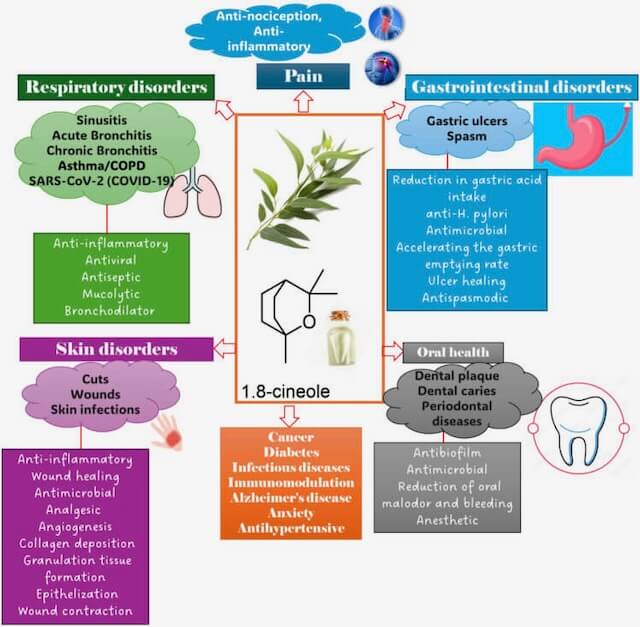
Image from Therapeutic Applications of Eucalyptus Essential Oils. Used under CC BY 4.0 with no changes.
