- Home
- Essential Oil Profiles
- Cinnamon Essential OIl
As an affiliate for Bookshop, Amazon, and other programs, I may earn a small commission for products purchased through links. Privacy policy and disclosures.
Cinnamon Essential Oil Benefits and Uses in Aromatherapy
"Love, in all its many guises, speaks through cinnamon," writes aromatherapist Valerie Ann Worwood in Aromatherapy for the Soul. She also says that the emotional benefits of cinnamon essential oil are to encourage invigoration, benevolence, strength, energy, confidence, motivation, and generosity.
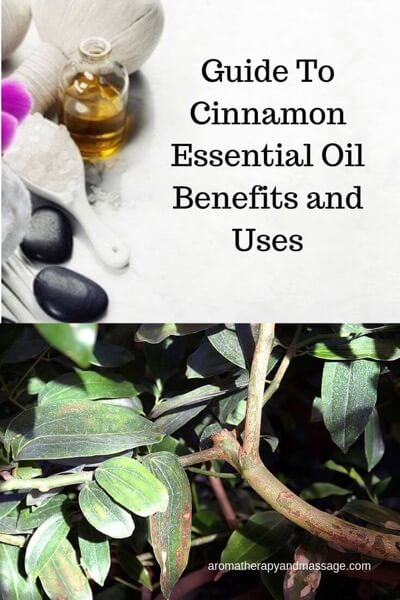
Know Your Cinnamon
True cinnamon (Cinnamomum verum) is a shrub or small tree native to Sri Lanka (formerly known as Ceylon). This cinnamon is also called Cinnamomum zeylanicum or Ceylon cinnamon.
Essential oils are distilled from both tree bark (cinnamon bark essential oil) and leaves (cinnamon leaf essential oil). The two oils have different chemical compositions. The bark oil contains
a high percentage of cinnamaldehyde and a small amount of eugenol.
The leaf oil has more eugenol with a
small amount of cinnamaldehyde.
Another species of cinnamon is Cinnamomum aromaticum (also called Cinnamomum cassia, cassia, Chinese cinnamon, or false cinnamon). Like cinnamon bark essential oil, cassia essential oil contains a large amount of cinnamaldehyde. Do not confuse cassia with cinnamon, as the oils have different properties and uses.
Cinnamon
bark essential oil is strong and some aromatherapy sources recommend
avoiding it in favor of the leaf oil. However, other sources recommend
the bark oil as more effective. Keep in mind that both oils
can sensitize and irritate skin, so use them with care.
Even a strong diffusion of cinnamon may irritate the mucous membranes of
the nasal passages and eyes.
Basic Cinnamon Facts
Plant family: Lauraceae.
Production: Steam distilled from the leaves or bark of the cinnamon tree. The bark oil costs more than the leaf oil because distilling bark yields less oil than distilling leaves.
Aroma: Warm, pungent, earthy, spicy. The leaf oil tends toward a sharper, more herbal scent than the bark oil.
Perfume/Aromatic note: Base to middle.
Is cinnamon essential oil safe to use during pregnancy? No.
Is cinnamon essential oil safe for children? Some sources recommend not using cinnamon with children under age 10.
Main components:
Bark Oil
- (E)-Cinnamaldehyde 63.1–75.7%
- Eugenol 2.0–13.3%
- (E)-Cinnamyl Acetate 0.3–10.6%
- Linalool 0.2–7.0%
Leaf Oil
- (E)-Cinnamaldehyde 0.6–1.1%
- Eugenol 68.6–87.0%
- (E)-Cinnamyl Acetate 0.8–4.6%
- Linalool 2.0–5.0%
Source: Essential Oil Safety, 2nd Ed.
Cautions:
Cinnamon is a strong oil that can irritate skin. For skin use, Essential Oil Safety suggests using cinnamon bark at no stronger than a 0.07% dilution (1 drop in 7 teaspoons carrier oil) and using cinnamon leaf at no stronger than a 0.5% dilution (1 drop in 1/2 teaspoon carrier oil). Spot testing recommended.
Cinnamon bark oils may be adulterated with cinnamon leaf or cassia. Read labels: I saw a company on Amazon selling a product labeled cinnamon bark, but when I read the details, I found it was actually Cinnamomum cassia. The two are not the same.
Aromatherapy for Health Professionals suggests avoiding cinnamon bark oil if you have a liver condition or alcoholism or when taking acetaminophen (the active ingredient in Tylenol). The reason is cinnamaldehyde may deplete glutathione, an antioxidant the liver uses to help break down toxins for removal from the body.
Cinnamon Essential Oil Benefits
Cinnamon bark has a strong "fire" energy that supports courage, transformation, releasing old patterns, and amplifying intentions, according to aromatherapist Liz Fulcher of the Aromatic Wisdom Community. Cinnamon leaf is more gentle and comforting and encourages emotional resilience, optimism, and steadiness when you feel depleted, discouraged, or disconnected from your inner spark.
When discussing the uses and benefits of cinnamon essential oil, some sources specify leaf or bark, while others don't. I divided the following benefits into three categories: general, leaf, and bark.
General Cinnamon Benefits
Commonly mentioned cinnamon essential oil benefits include:
- Tones the digestive system, improves appetite, and aids digestion.
- Relieves pain, especially arthritis, rheumatism, menstrual cramps, and headaches. Helps improve circulation.
- Helps heal insect bites, head lice, scabies, warts, and wasp stings.
- Eases colds, flu, and similar conditions.
- Relieves tension, steadies nerves, invigorates the senses, and acts as a mild aphrodisiac.
- Reduces depression, drowsiness, and irritability, and helps relieve stress-related weak and exhausted conditions.
Sources:
- Aromatherapy: A Complete Guide to the Healing Art
- Essential Oils & Aromatherapy for Dummies
- The Complete Aromatherapy & Essential Oils Handbook for Everyday Wellness
Spiritually, cinnamon increases spiritual and psychic awareness, according to The Essential Guide to Aromatherapy and Vibrational Healing. Use the oil with the intention of increasing your intuitive skills. Mentally, this essential oil supports cognitive function and wakes you up. Emotionally, cinnamon increases your confidence and self-esteem.
In ayurveda, cinnamon pacifies vata and kapha and increases pitta, according to Marma Points of Ayurveda. The oil's virya (energy) is heating, and the oil is not recommended for high pitta. The rasa (taste) is sweet, pungent, and slightly astringent, and the vipaka (aftertaste) is pungent. This oil has an affinity for the lungs and helps decongest and loosen mucus. The oil also improves circulation and may help reduce cholesterol and triglycerides. Do not use with a bleeding disorder.
Cinnamon Leaf Essential Oil Benefits
Cinnamon leaf helps relieve the following conditions:
- Colds, flu, coughs, fevers
- Fungus
- Muscle injury, aches, and pains
- Rheumatism, arthritis, and cold arms and legs
- General physical debility, exhaustion, and fatigue
- Nervous exhaustion and stress-related conditions
- Sluggish digestion
- Warts
You can also use cinnamon leaf oil in tooth and gum care products.
Sources: The Complete Book of Essential Oils and Aromatherapy and The Encyclopedia of Essential Oils (updated edition).
During the winter months, enjoy cinnamon leaf's warming and elevating scent in your aromatherapy diffuser to relieve brain fog and winter blahs, according to Essential Oils Complete Reference Guide. The warm fragrance makes this oil excellent any time for warming your mind and emotions and dispersing feelings of loneliness.
Energetically, cinnamon leaf strengthens, invigorates, and motivates, according to Aromatherapy Anointing Oils. The oil's specific chakra uses:
- Seventh (crown) chakra: strengthens spiritual resolve.
- Sixth (third eye) chakra: strengthens and supports the mind and intuition and helps recover memories.
- Fifth (throat) chakra: strengthens ability to communicate and promotes assertive communication.
- Fourth (heart) chakra: strengthens the sensitive heart and promotes generosity and selfishness.
- Third (solar plexus) chakra: promotes willpower, self-control, courage, and confidence. Encourages perseverance and action and appropriately strengthens personal power.
- Second (sacral) chakra: promotes emotional strength.
- First (root) chakra: grounds and strengthens. Promotes vitality.
Cinnamon Bark Essential Oil Benefits
Aromatica: A Clinical Guide to Essential Oil Therapeutics, Vol. 2: Psychologically, cinnamon bark promotes courage, self-confidence, disinhibition, and integration. Physically, the essential oil stimulates and warms cold conditions and restores weak conditions. In Traditional Chinese Medicine, cinnamon bark has the following characteristics:
- Aroma energy: Pungent, sweet, woody
- Movement: Circulating
- Warmth: Warm to hot
- Meridian tropism: Kidney, Spleen, Lung
- Five-element affinity: Earth, Water
- Essential function: Tonify the Yang, warm the interior, and strengthen the Shen
The Blossoming Heart: Use cinnamon bark when you feel emotionally withdrawn and live in a state of separation. The oil helps you listen to your deepest self and find a connection to lead you away from feelings of separation.
Cinnamon Essential Oil Uses and Blends
Four cinnamon essential oil uses:
- Include the oil in warming liniments for tight muscles, painful joints, or menstrual cramps and to improve circulation.
- Add cinnamon to your homemade cleaning products to help fight germs.
- To get rid of musty smells from a garbage disposal: First, run soapy water down the drain. Then add 5 drops of cinnamon bark and 3 drops of lemon essential oil and let them sit for up to an hour.
- Create an invigorating, uplifting diffuser blend to relieve fatigue and lethargy by blending cinnamon bark with ginger, sweet orange, lemon, or rosemary essential oil, according to The Complete Guide to Aromatherapy, Third Edition, Vol. 1.
Cinnamon Bark Essential Oil Blends
Fall Diffuser Blend
- 2 drops cinnamon bark
- 2 drops clove bud
- 2 drops lemon
- 2 drops orange
Cheery Diffuser Blend
- 2 drops cinnamon bark
- 2 drops rosemary
- 2 drops peppermint
Cinnamon and Blood Sugar
Research has suggested that cinnamon may help control blood sugar. However, the effects resulted from using whole cinnamon or its extract, not essential oil. Research from the USDA suggests using one-half teaspoon of cinnamon extract a day could dramatically improve blood sugar, cholesterol, LDL cholesterol, and triglycerides in people with type 2 diabetes.
As for the essential oil, the 2022 meta-analysis Antidiabetic Potential of Volatile Cinnamon Oil, reported that cinnamon essential oil studies show the oil improves "fasting blood glucose, fasting insulin, and improvement in both anatomy and function of kidney and liver cells." However, many studies were on animals, and more research with humans is needed.
About the Author

Carol Wiley is a retired massage therapist and freelance writer. She uses her deep interest in aromatherapy and essential oils to research their benefits and uses and bring you summaries and blends with links to more resources.
If you find this site useful, you can show your support by buying through my affiliate links. The site is a labor of love, and I appreciate any income that helps keep it up and running.
Buy essential oils at Aromatics International or Rocky Mountain Oils.
Buy massage supplies at Massage Naturals.
Buy anything at Amazon.
You might like these
Ylang Ylang Essential Oil Benefits and Uses In Aromatherapy
Understand the benefits and uses of ylang ylang essential oil, including acting as an aphrodisiac, balancing all skin and hair types, and relaxing muscles.
Lemon Essential Oil Benefits and Uses In Aromatherapy
The bright, uplifting, clean aroma of lemon essential oil makes it great for energizing, cleaning, clearing the air and the body, and more.
Sage Essential Oil Benefits and Uses In Aromatherapy
Sage essential oil has uses and benefits in aromatherapy but must be used with caution due to its components. Learn more about how to use sage safely.

Photo Credit: David J. Stang [CC BY-SA 4.0], via Wikimedia Commons
